
The Illusion of Standing Still
A watch that isn't running doesn't feel urgent. No ticking, no problem — or so the logic goes. It's an intuitive but mistaken assumption, and it's one we hear often from collectors who've set a piece aside "just for a period" while they travel, rotate their collection, or wait for a quieter month to deal with maintenance. But a movement in mechanical decline doesn't pause while it sits in a drawer or on a wrist unattended. Dried lubricants continue to thicken. Metal-on-metal contact continues, unmitigated, every time the watch is worn. Delay doesn't freeze the damage. It compounds it.
Consider the difference between a car and a watch. A car left idle in a garage for six months doesn't accumulate wear — nothing is moving. A mechanical watch, by contrast, is a closed system in near-constant motion. Even a piece sitting still on a shelf has a mainspring under tension and, if it's an automatic worn intermittently, a rotor that shifts with the slightest handling. There is no true "off" state for a mechanical movement the way there is for most machines people intuitively understand. That's the root of the misunderstanding, and it's why so many serious collections carry more risk than their owners realize.
For serious collectors, this distinction matters more than most maintenance conversations acknowledge. A seven-figure collection isn't protected by the absence of visible symptoms. It's protected by understanding what's actually happening beneath the dial — and acting on that understanding before the symptoms appear.
What Actually Happens Inside a Neglected Movement
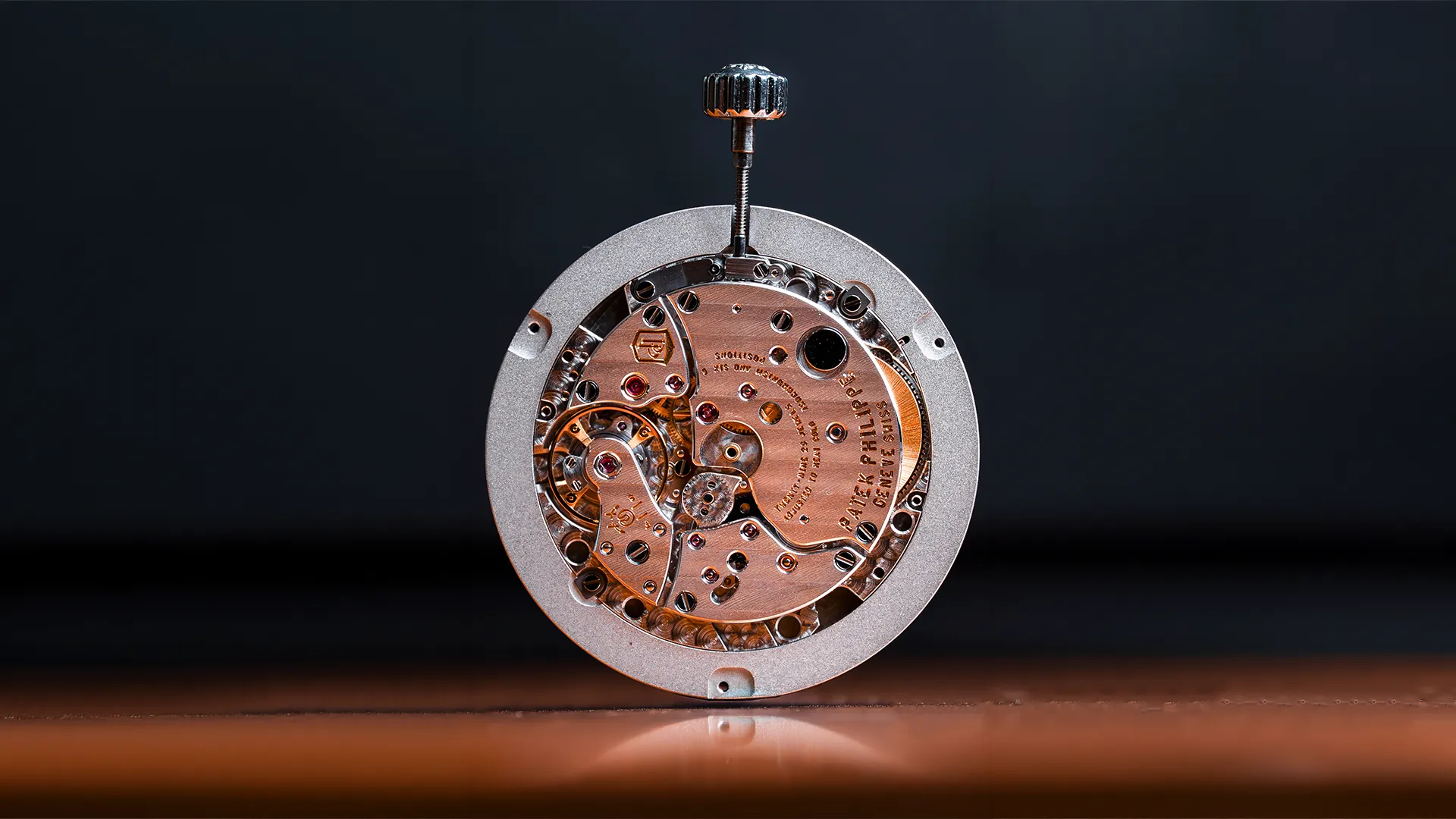
A mechanical watch contains anywhere from 130 to well over 300 components, depending on complexity, operating with tolerances measured in microns. A pivot resting in a jewel bearing might have clearances of a few hundredths of a millimeter. At that scale, lubrication isn't a convenience — it's the entire basis on which the movement survives contact with itself. When servicing is delayed past its interval, typically three to five years depending on the manufacturer and the conditions the watch has lived in, three things happen in sequence:
- Lubricant breakdown — Modern watch oils are formulated to resist oxidation, but none are immune to it indefinitely. As oil ages, it oxidizes, loses viscosity, and eventually turns tacky or granular. What was once a thin, even film protecting a pivot becomes a dried residue that increases friction instead of reducing it. This is especially pronounced at the escapement and mainspring barrel, where load is highest and lubrication does the most work.
- Accelerated wear — Once lubrication fails, components that were engineered for oil-mediated contact begin to abrade directly. Steel pivots wear grooves into jewel bearings. Pallet stones chip. The escape wheel, cut with teeth as fine as a human hair is wide, begins to show wear patterns that no amount of cleaning can reverse. This is the point where a watch typically still runs — often within a few seconds a day of its original accuracy — which is exactly why owners don't notice anything is wrong.
- Secondary damage — This is the stage that turns a routine service into a real repair. A worn pivot transfers uneven load to its neighboring components. A weakened mainspring puts irregular torque through the gear train, straining parts downstream. What began as a single-part issue under normal service becomes a multi-part failure requiring replacement, and in some cases, cannibalized or fabricated parts to restore.
The watch may still run throughout all three stages. That's precisely what makes the decline dangerous — there's no dashboard warning light, no obvious signal that intervention is overdue. The only reliable indicator is time: how long it's been since the movement was last opened, cleaned, and re-lubricated by someone qualified to assess it.
The Financial Reality of Waiting
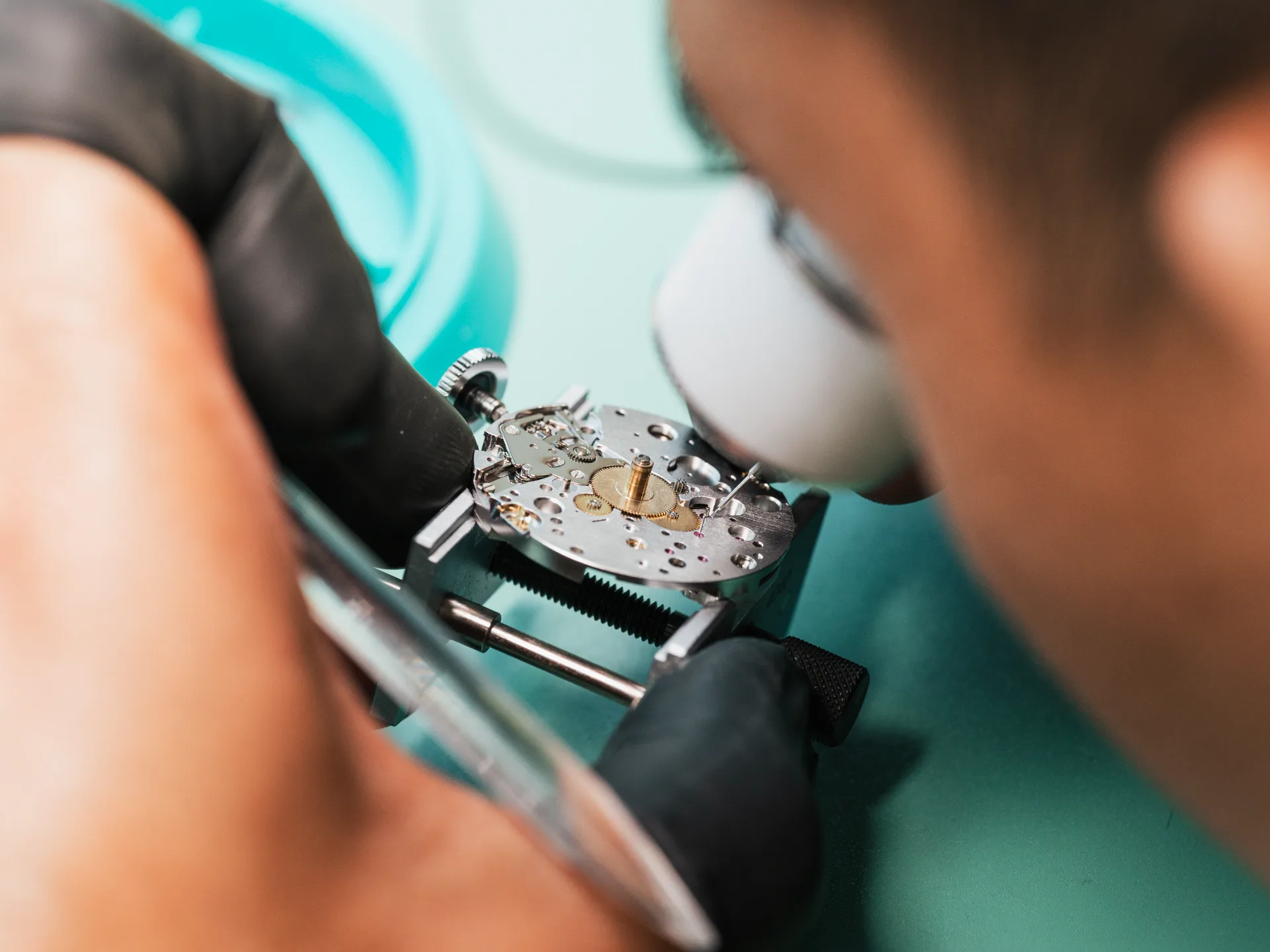
A Complete Overhaul performed on schedule addresses a movement at a known state. A watchmaker opens the case, assesses the movement against known service benchmarks, replaces worn parts as identified, and reassembles with fresh lubrication — a process with predictable scope and predictable cost, whether the piece is a contemporary chronometer or a well-documented vintage reference.
Deferred maintenance changes that equation entirely. What would have been a routine service — clean, lubricate, regulate, replace a mainspring or gasket as a matter of course — can become a parts-replacement situation once wear has progressed past the point of simple correction. This is particularly acute for vintage or limited-production calibers, where original components haven't been manufactured in decades. A worn pallet fork or a cracked balance staff for a discontinued caliber isn't a same-week fix. It can mean months of sourcing through specialist networks, fabrication of a part to original specifications, or in the worst cases, accepting a non-original replacement that a future buyer's watchmaker — or a future auction house — will flag during inspection.
That last point deserves emphasis, because for collectors, mechanical condition and resale value are not separate conversations. A watch with a documented, on-schedule service history commands a different position in the market than one with an unclear or lapsed record. Buyers at the level this audience operates at — and the specialists who advise them — routinely ask for service history before finalizing a transaction. A movement that required emergency part replacement, or worse, shows evidence of prior neglect during independent inspection, becomes a harder asset to place at full value. For a collector holding a portfolio of serious timepieces, this isn't a minor inconvenience or an abstract risk. It's a direct threat to the mechanical integrity — and resale value — of an asset that was likely acquired, at least in part, as a long-term store of value.
Why Time Is the Inflection Point
Mechanical decline does not follow a calendar. It follows operating hours, lubrication age, environmental exposure, and the condition of the components themselves. A movement does not become safer because it is worn less frequently. Lubricants continue to age. Components remain vulnerable to friction and corrosion whenever the movement operates.
The way a watch is stored and worn also matters. Travel, changes in environment, frequent winding, and extended periods on the wrist increase the number of cycles a movement experiences. A watch that moves between air-conditioned rooms, humid streets, hotel rooms, and different elevations encounters changing conditions that can affect lubrication, sealing, and amplitude. Even a collection piece that spends most of its time secured in storage still requires periodic assessment because elapsed time itself changes the condition of materials inside the movement.
This is not a scare tactic. It is simply how mechanical systems behave as lubricants age and components accumulate operating cycles. The watches most likely to develop costly issues are not necessarily the oldest or most heavily worn; they are often the pieces whose service history has become uncertain, whose symptoms have been tolerated, or whose maintenance has been repeatedly postponed. A movement can remain apparently functional while its internal condition moves steadily away from the state in which it was designed to operate.
The more useful question, then, is not whether a watch is being worn. It is whether the movement is still operating within a condition that can be addressed predictably. That distinction turns maintenance from a reaction to failure into an informed decision based on elapsed time, service history, observed performance, and the condition of the movement.
The Standard Response
Serving serious collectors means being direct about what mechanical decline actually costs — not in alarmist terms, but in engineering terms grounded in how these movements are built and how they fail. That's the distinction we hold ourselves to: not urgency for its own sake, but urgency that follows logically from an understanding of tolerances, lubrication chemistry, and wear mechanics that most owners, however sophisticated in other domains, simply haven't had reason to study closely.
A Complete Overhaul performed on schedule is a controlled, predictable investment in longevity — a fixed, known cost that protects both the mechanism and the piece's standing in the market. One performed after the fact, once wear has progressed into secondary damage or parts sourcing, is a repair dictated by circumstance rather than choice. The owner no longer controls the scope or the timeline; the condition of the movement does.
The difference isn't cosmetic. It's structural, and it shows up in exactly the places that matter most to a serious collector: how the watch performs, how long it lasts, and what it's worth when it changes hands.
The Takeaway
An unaddressed movement doesn't cost you today. It costs you later — in scope, in sourcing difficulty, and in value retained. The watch will keep running, right up until the point where the cost of waiting becomes visible in ways that are far harder to reverse than a scheduled service would have been. For collections built with intention, and maintained by owners who understand what's actually happening inside the case, the smarter position is always the proactive one.
If it's been more than three years since your movement was last opened and serviced by a qualified watchmaker, the window to act on your terms — rather than the movement's — is closing over time. Book a Complete Overhaul with Watch Solutions before deferred wear alone makes the decision for you.