
The Watch That Arrives With a History
No watch that comes through our doors arrives as a blank slate. A worn crown guard tells us about a wrist that moves through humidity and heat every day. A faded bezel insert hints at years under the Philippine sun. Before a single tool touches the case, the watch has already lived a story — and so has the relationship between its owner and whoever has cared for it.
This month, we're exploring a theme we believe matters more than most conversations about watch servicing allow for: trust before toolkit. It's easy to talk about a complete overhaul in terms of parts, lubricants, and precision. Those things matter enormously. But they are not where trust begins. Trust begins earlier — in conversations, in honest assessments, in the kind of relationship that develops over repeat visits rather than a single transaction.
So the question this post sets out to answer is simple, if not often asked: what actually makes an overhaul trustworthy? Not technically correct — trustworthy. The answer, we'd argue, has as much to do with the relationship around the watch as the craftsmanship inside it.
What 'Brand Service Centre' Trust Really Means — and Its Limits
Official brand service centres exist for good reason. They offer standardised procedures, factory-trained technicians, and consistent quality benchmarks across a global network. For many owners, especially those servicing a single piece under warranty, this model works well.
But it is, by design, a transactional model. A watch is logged in, assessed against a fixed checklist, serviced according to brand protocol, and returned. The structure prioritises consistency over dialogue. There is rarely room for a technician to say, "I remember this movement from two years ago — here's what's changed," because the person doing the work today is unlikely to be the person who touched it last time, or the time before.
This isn't a criticism so much as an observation about scale. A global service network arguably cannot build the kind of ongoing, personal dialogue that comes from a smaller, independent relationship. That's the gap a relationship-first model is built to fill — not by being faster or cheaper, but by being continuous. An independent watchmaker who sees the same collection, the same owner, and the same questions over years develops a different kind of insight than a checklist can provide. That's the contrast worth understanding before choosing where to trust a timepiece.
The Philosophy: An Overhaul Begins Before the Watch Arrives
At Watch Solutions, we think of trust as something built in layers, long before a case back is ever opened. It starts with a first conversation — often not even about servicing, but about a client's collection, how they wear their pieces, what concerns them. It continues through repeat visits, where an honest assessment is given each time, whether that assessment leads to a full overhaul or simply a recommendation to wait.
Over time, this builds something a single transaction cannot: context. A watchmaker who has serviced a client's collection before knows whether a particular piece runs in a humid environment daily or sits in a safe most of the year. They know if an owner tends to wear a watch swimming, or if a slightly stiff crown was already present at the last visit. That context changes how judgment calls get made during servicing — what to flag as urgent, what to monitor, what's simply cosmetic wear versus a sign of a developing issue.
This is why we position Watch Solutions as a relationship-first independent alternative, not merely an independent option. The independence matters less than the continuity. A complete overhaul performed by someone who already understands a watch's history — and the habits of the person wearing it — is arguably better informed than one performed cold, no matter how skilled the hands doing the work.
Honest Assessment: The First Step of Every Trusted Overhaul
Every trusted overhaul we perform starts the same way: with an honest assessment, not a quote.
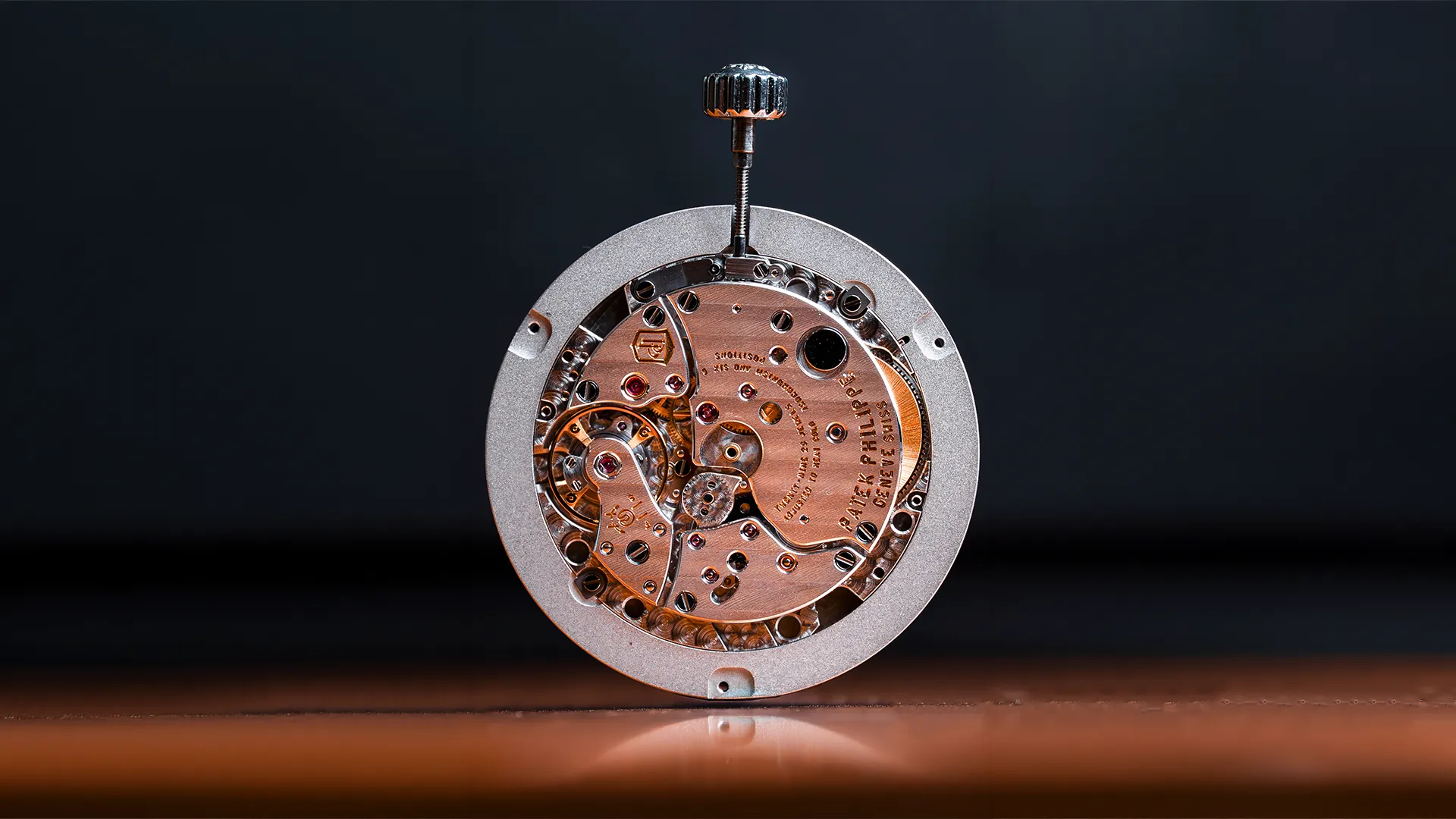
This means a visual inspection of the case, crystal, and bracelet or strap for wear, damage, or prior repair work. It means opening the case back to examine the movement — checking for signs of moisture, rust, worn jewels, or amplitude issues using a timing machine. And critically, it means sitting down with the owner afterward to talk through what we actually found, in plain language.
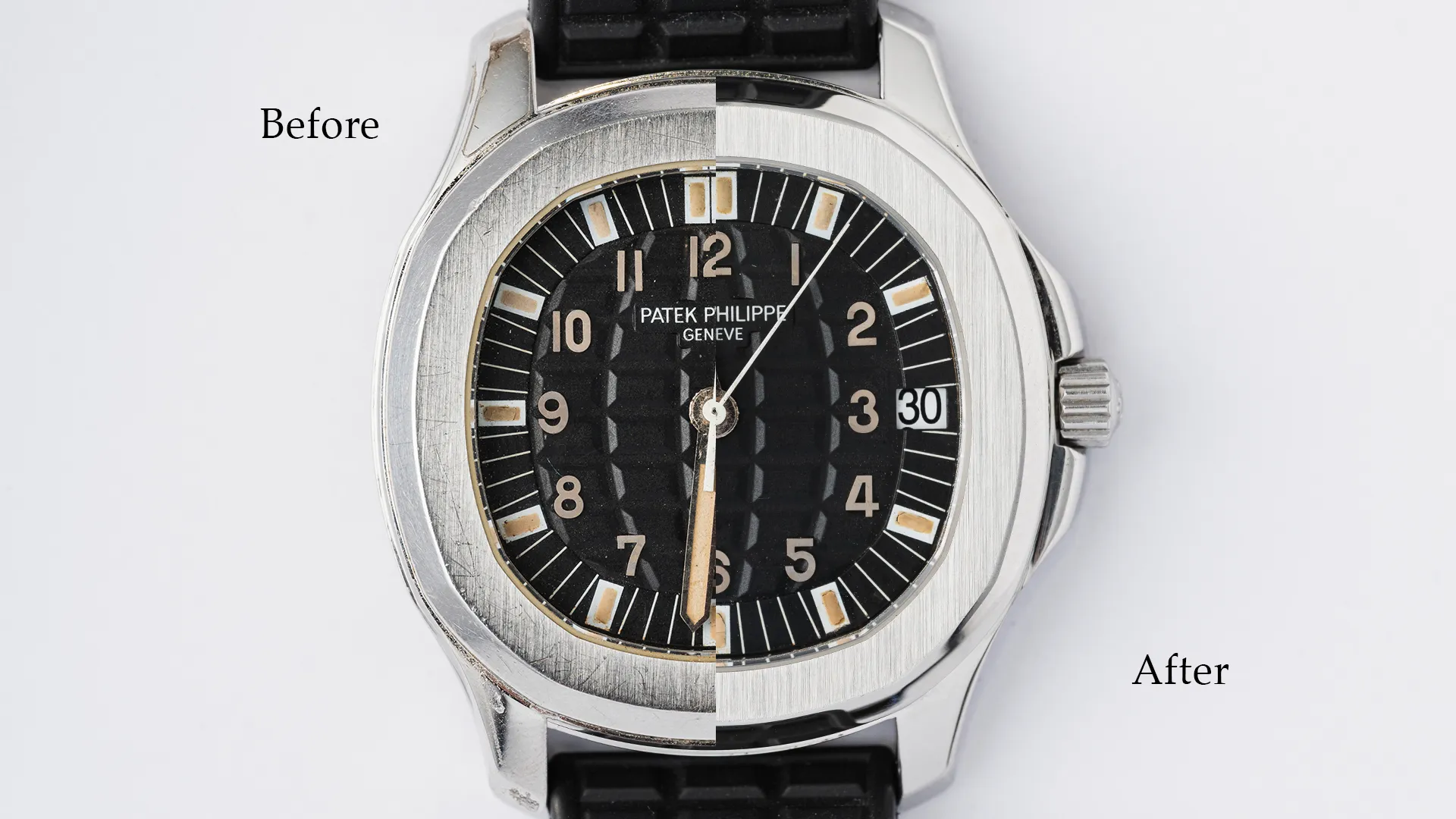
Some watches need a complete overhaul. Others need far less — a seal replacement here, a cleaning there. Part of what builds long-term credibility, we believe, is saying so plainly, even when a more extensive job might be the easier sell. If a movement is healthy and only needs a pressure test and a case polish, that's what we recommend.
This stage is about educating the client, not upselling them. An owner who understands why their chronograph's pushers feel spongy, or why a thirty-year-old automatic is due for a full service regardless of how it currently runs, is an owner who can make an informed decision — and who will likely return the next time something needs attention. That return visit, more than any single repair, is what an honest assessment is really building toward.
Inside the Process: Where Skill Meets Relationship
Once trust is established and an assessment agreed upon, the technical work begins — and this is where craft takes over.
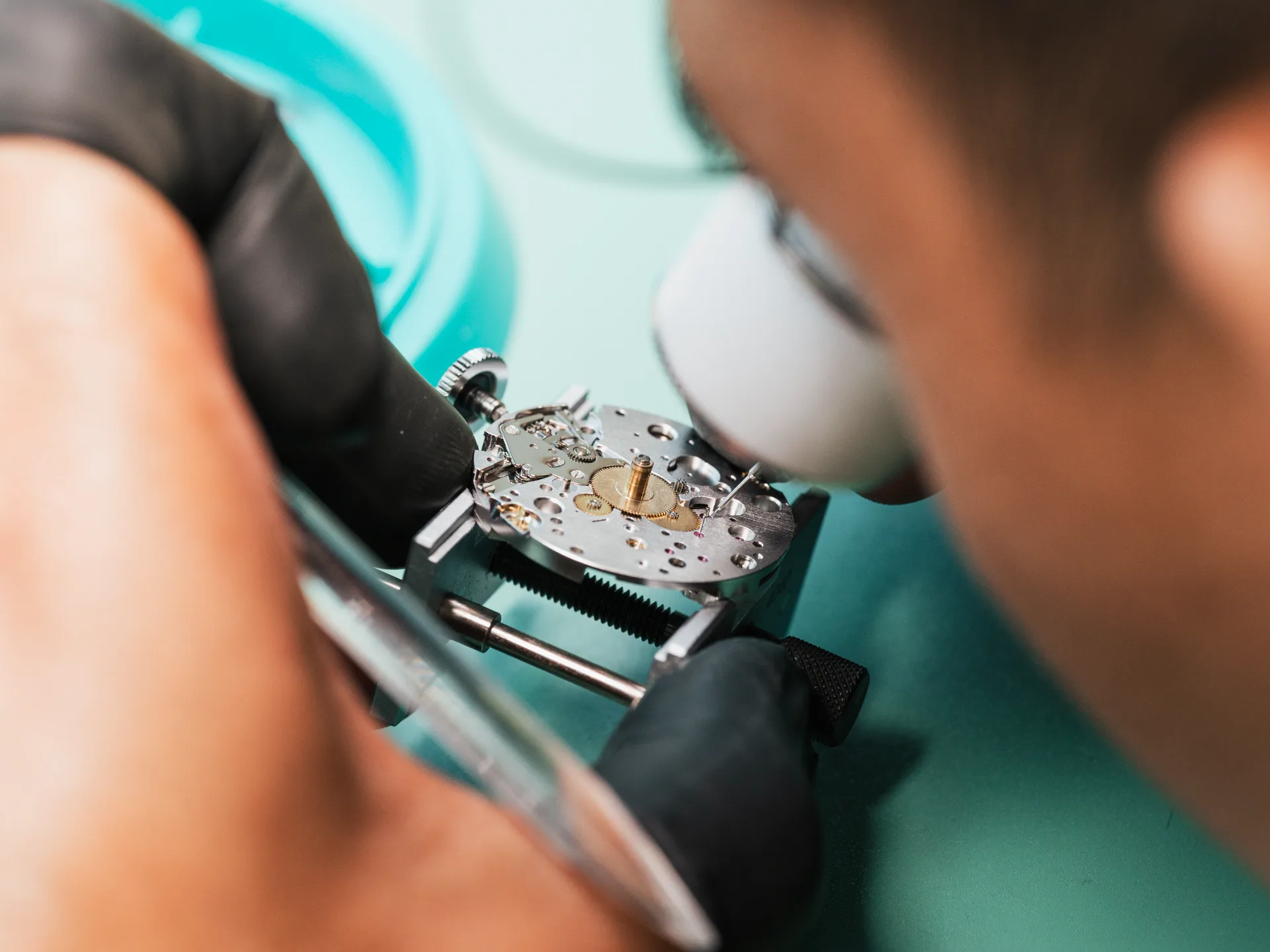
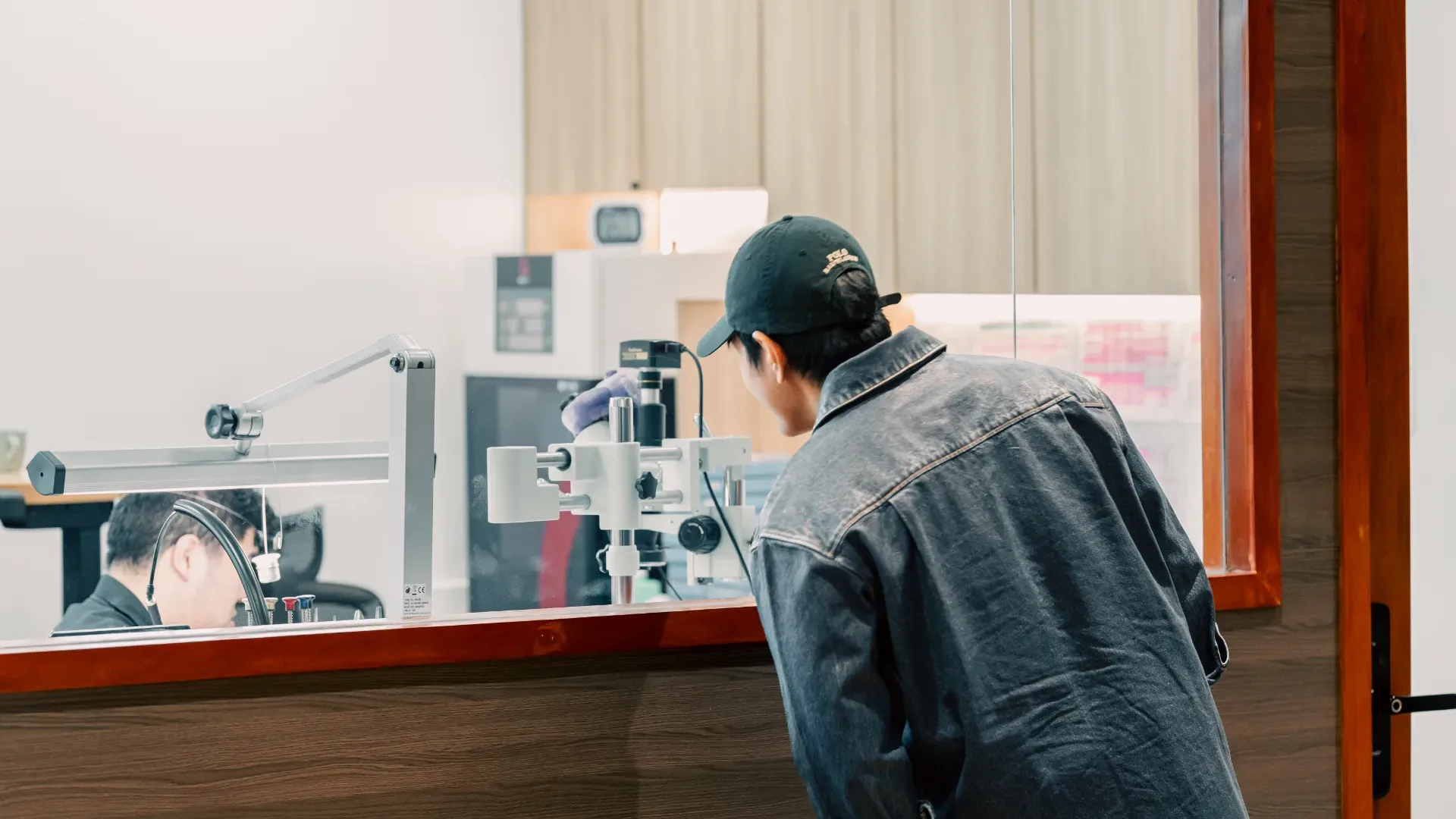
Our process includes inspection under a viewing glass to catch surface-level issues invisible to the naked eye, and microscope-level checks projected to screen for closer examination of pivots, jewels, and wear points that determine whether a component can be reused or needs replacement. Cleaning runs through a Greiner line, a Swiss-made ultrasonic cleaning system used to remove old lubricant and particulate buildup from every component before reassembly. After the movement is rebuilt, regulated, and cased, we conduct pressure testing to confirm water resistance before the watch is returned.
We choose to show this process on camera — the viewing glass, the microscope feed, the cleaning line, the pressure test — not as spectacle, but as an extension of the same transparency that begins with the honest assessment. If trust is built on dialogue, showing the work is simply dialogue in a different form.
It's worth saying plainly: skill executes what trust makes possible. The microscope doesn't build the relationship, and the Greiner line doesn't replace the conversation that came before it. But without the technical rigor behind them, the trust wouldn't be worth much either. The two depend on each other.
Why Relationships, Not Single Transactions, Define Service Quality
A single successful repair tells you a watchmaker can do good work once. A relationship spanning years tells you something more useful — that the same hands have tracked a watch's condition across multiple services, and can speak to how it has changed over time.
This continuity matters most for collectors with multiple pieces or long ownership horizons. A client with a small collection serviced at the same centre over a decade benefits from a kind of institutional memory: which pieces run fast, which have had case work before, which movements tend to need attention sooner than others. That memory arguably makes each subsequent overhaul more precise, not because the techniques change, but because the context deepens.
This is also why we don't think credibility is built in a single appointment, however well it goes. It accumulates — visit by visit, honest assessment by honest assessment — until a client trusts not just a result, but a relationship. That cumulative trust is, we believe, the real foundation beneath the technical standard.
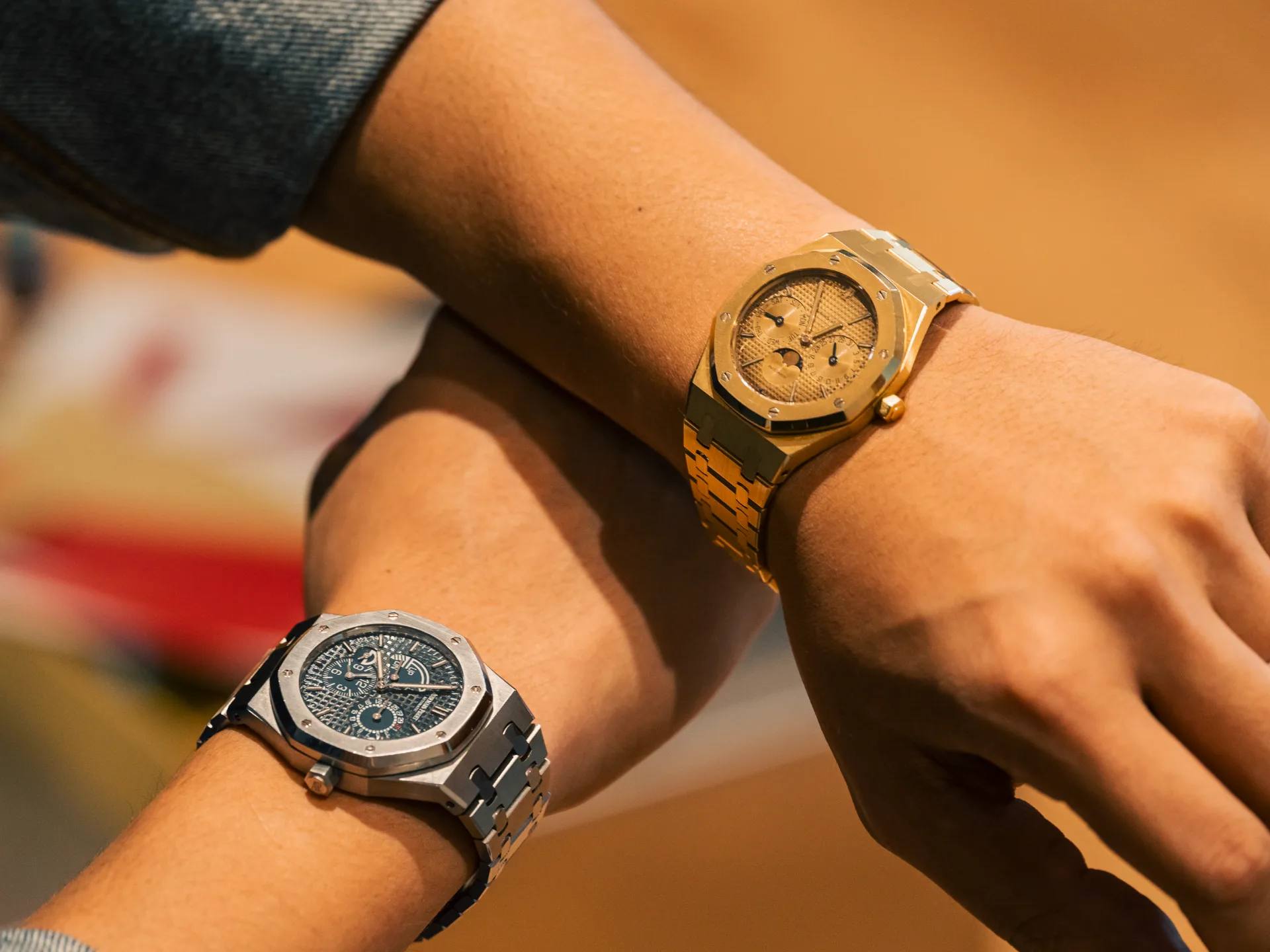
What This Means for Collectors Considering an Overhaul
Whether or not Watch Solutions ends up being the right fit, there are a few things worth looking for when deciding who to trust with a timepiece.
First, transparency: does the service centre explain what they find before committing to work, or move straight to a quote? Second, communication: are you able to ask questions and get plain-language answers, not just technical jargon? Third, willingness to show the process: a watchmaker confident in their work is usually willing to let you see it, whether that's through photos, video, or simply walking you through what happened to your movement.
These aren't criteria unique to any one service centre — they're reasonable expectations for anyone entrusting a mechanical watch, often one with significant sentimental or financial value, to someone else's hands. As we move through the rest of this month's posts, we'll go deeper into the overhaul process itself — what actually happens between assessment and delivery. But that process only means as much as the trust it's built on.
Trust, Earned Over Years
An honest overhaul, in our view, is built on relationship and transparency as much as technical skill. The viewing glass, the Greiner line, the pressure test — all of it matters, but none of it replaces the conversations that come before and after the work itself.
This is the standard we hold ourselves to as we continue working toward being recognised as the Philippines' most trusted independent service centre — not through a single transaction, but one relationship at a time, visit after visit, year after year.
In the coming weeks, we'll go further into what a complete overhaul actually involves, piece by piece. But it starts here, with trust before toolkit.
If you're considering an overhaul, start with a conversation — schedule an honest assessment with Watch Solutions and see what a relationship-first approach looks like before any work begins.